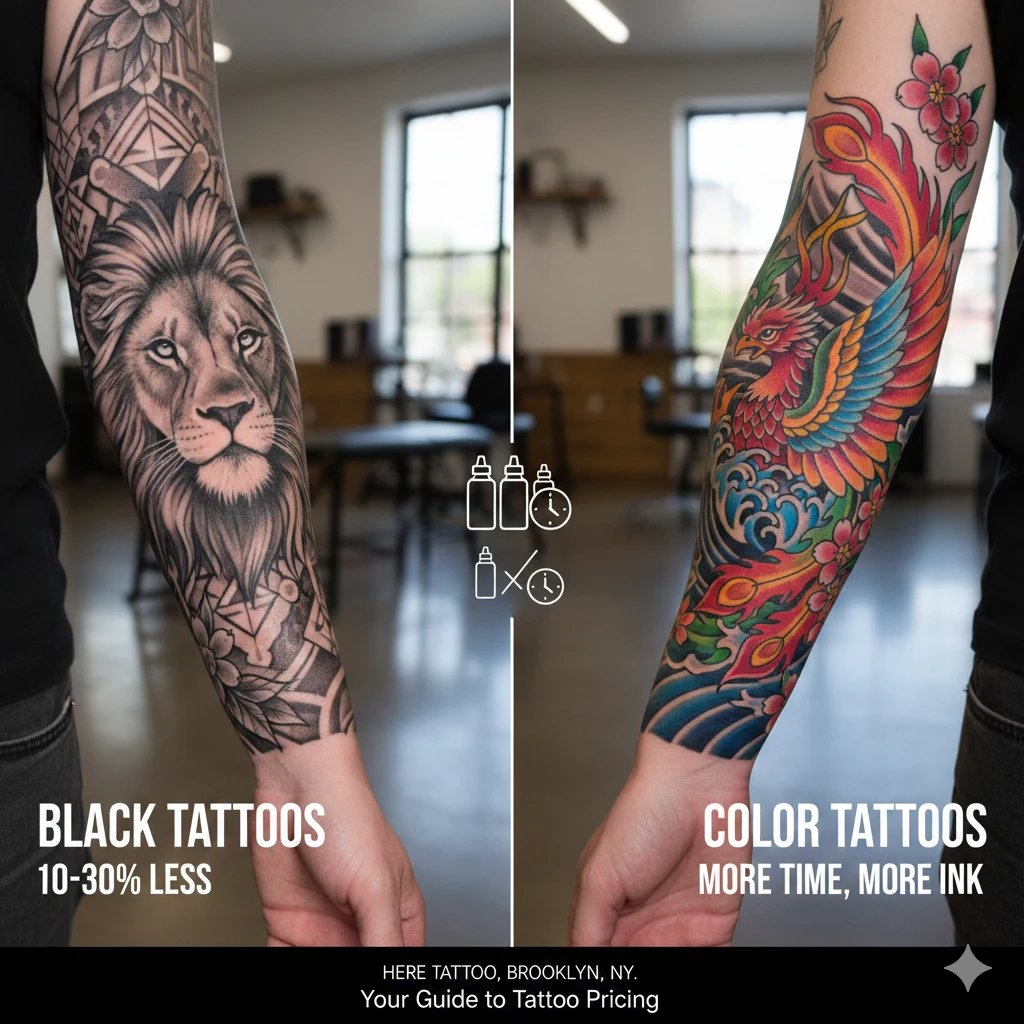
Black tattoos typically cost 10-30% less than color tattoos because they require fewer ink changes, less time, and simpler technical execution. A medium-sized black tattoo might run $150-$300, while the same design in color could cost $200-$400. But pricing isn't just about ink—design complexity, artist experience, and session length matter more than color choice alone.
This price difference affects your budget and design decisions. Whether you're planning your first tattoo or adding to your collection, understanding what drives costs helps you invest wisely.
We'll break down exactly how black and color tattoos compare in price, what factors influence the final cost, and how to get the best value for your investment.
Why Black Tattoos Are Generally Less Expensive

Black ink tattoos cost less primarily because of time efficiency. Artists work faster with a single ink color, spending less time switching cartridges, cleaning equipment, and mixing shades. Industry data shows that color tattoos take 20-40% longer to complete than comparable black designs.
The technical simplicity reduces labor costs. Black ink application follows a straightforward process: outline, shade, fill. Color work requires layering multiple hues, blending transitions, and ensuring even saturation across different pigments. Each additional color adds 15-30 minutes to session time, directly increasing your final bill.
Material costs favor black ink too. Artists stock black ink in larger quantities at lower per-unit prices. Color palettes require maintaining 10-20 different pigments, many used sparingly, which increases overhead. These savings typically pass to clients through lower hourly rates or flat fees for black-only designs.
Touch-up requirements differ significantly. Black tattoos need fewer corrections because the single pigment heals predictably. Color tattoos often require touch-up sessions to fix fading or uneven saturation, adding $50-$150 to total costs. This maintenance factor makes black tattoos more economical long-term.
How Ink Type Affects Tattoo Pricing
Ink quality creates the foundation for pricing differences. Professional-grade black ink costs $15-$30 per bottle, while premium color sets run $200-$400 for a complete palette. Artists factor these material costs into their rates, though the impact is smaller than labor expenses.
Black ink's chemical stability keeps costs predictable. Carbon-based black pigments resist fading and require minimal reformulation. Color inks use complex compounds that vary by manufacturer, with some premium brands charging 3-4 times more than standard options for better longevity and vibrancy.
Vegan and organic inks command premium prices regardless of color. These specialty formulations cost 20-50% more than traditional inks but appeal to clients with sensitivities or ethical preferences. The price increase applies equally to black and color work, maintaining the relative cost advantage of black tattoos.
Ink volume matters more than you'd expect. A palm-sized black tattoo might use 1-2 caps of ink, while the same design in color could require 5-8 caps across multiple hues. This volume difference compounds with ink costs, though it remains secondary to time-based pricing.
Design Complexity vs. Color Choice
Design intricacy outweighs color choice in final pricing. A detailed black mandala with fine linework and intricate shading costs more than a simple two-color design. Tattoo pricing surveys indicate that complexity accounts for 60-70% of price variation, while color adds 10-30%.
Geometric black tattoos with precise lines require exceptional skill and time. Artists charge premium rates for technical difficulty regardless of color palette. A complex geometric sleeve in black might cost $2,000-$4,000, while a simple color flower could run just $150-$250.
Shading techniques drive costs in black tattoos. Realistic portraits, smooth gradients, and dotwork require hours of meticulous work. These techniques demand expertise that commands higher hourly rates, often $150-$300 per hour for master artists specializing in black and grey realism.
Size and placement interact with design complexity. A small, simple black tattoo on your forearm might cost $80-$150. The same size in a difficult location like ribs or fingers could double the price due to technical challenges, regardless of whether you add color.
Artist Experience and Hourly Rates
Artist expertise creates the widest price variation in tattooing. Apprentices might charge $50-$80 per hour for black tattoos, while renowned artists command $200-$500 per hour regardless of color choice. The skill premium far exceeds any color-based pricing difference.
Specialization affects rates more than color preference. Artists known for black and grey realism charge premium prices for their expertise. Industry analysis shows that specialist artists charge 40-60% more than generalists, even for simpler designs in their specialty.
Portfolio quality signals pricing tiers. Artists with strong Instagram followings, magazine features, or celebrity clients charge accordingly. A black tattoo from a celebrity artist might cost $500-$1,000 per hour, while an equally skilled but less famous artist charges $150-$250 for identical work.
Experience translates to efficiency. Veteran artists complete designs faster, potentially offsetting higher hourly rates. A master artist might finish a black sleeve in 15 hours at $250/hour ($3,750 total), while a mid-level artist takes 25 hours at $150/hour ($3,750 total)—same final cost, different value proposition.
Shop Location and Overhead Costs
Geographic location dramatically impacts tattoo pricing. Brooklyn shops charge $150-$300 per hour for quality work, reflecting high rent and operating costs. The same artist in a smaller city might charge $100-$150 per hour, with color premiums proportionally lower.
Shop reputation adds to base rates. Established studios with strong reputations charge 20-40% more than newer shops, regardless of color choice. This premium covers brand value, cleanliness standards, and artist selection—factors that matter more than ink color.
Overhead expenses vary by shop size and amenities. High-end studios with private rooms, premium equipment, and luxury waiting areas build these costs into pricing. A black tattoo at a premium Brooklyn studio might cost $200/hour, while a street-level shop charges $120/hour for comparable quality.
Walk-in rates differ from appointment pricing. Many shops offer 10-20% discounts on simple black flash designs for walk-ins, maximizing chair time during slow periods. These deals rarely apply to custom color work, making black tattoos more budget-friendly for spontaneous decisions.
Size and Session Length Considerations
Tattoo size directly correlates with cost, but color choice affects the multiplier. A 2x2 inch black tattoo might take 1 hour at $150, totaling $150. The same size in color could take 1.5 hours, costing $225—a 50% increase for minimal size.
Session length limits affect multi-sitting projects differently. Most clients tolerate 3-5 hours per session comfortably. Large black pieces might need 3 sessions, while color versions require 4-5 sessions due to slower progress, adding travel time and scheduling complexity.
Hourly rates often decrease for longer sessions. Artists might charge $200/hour for the first 3 hours, then $150/hour after that. Black tattoos reaching these discounts faster provide better value, though the difference narrows on very large projects.
Minimum charges apply regardless of size. Most quality shops enforce $80-$150 minimums even for tiny tattoos. This pricing floor makes color choice nearly irrelevant for small designs—you're paying the minimum either way.
Touch-Ups and Long-Term Maintenance
Black tattoos require fewer touch-ups than color work. Dermatological studies show that black ink retains 80-90% of its intensity after 10 years, while colors fade to 50-70% depending on pigment type and sun exposure.
Initial touch-ups are often free within 3-6 months, but color tattoos need them more frequently. Artists typically include one free touch-up session, valued at $100-$200. Color tattoos using this benefit more often, adding hidden costs to the initial price comparison.
Long-term maintenance costs favor black tattoos significantly. A color sleeve might need $300-$500 in touch-ups every 5-7 years to maintain vibrancy. Black and grey work might go 10-15 years before needing comparable investment, halving lifetime maintenance costs.
Sun damage affects color tattoos disproportionately. Reds and yellows fade fastest, often requiring touch-ups within 3-5 years for sun-exposed areas. Black tattoos on the same locations maintain appearance twice as long, reducing lifetime cost of ownership.
When Color Tattoos Justify Higher Costs
Certain designs demand color to achieve their intended impact. Realistic portraits, nature scenes, and traditional American styles lose essential character in black and grey. The 20-40% price premium for color becomes worthwhile when the design requires it for artistic integrity.
Color creates emotional resonance in memorial and symbolic tattoos. A realistic portrait of a loved one in full color might cost $800-$1,500, while black and grey runs $600-$1,000. The emotional value often justifies the $200-$500 difference for clients seeking maximum realism.
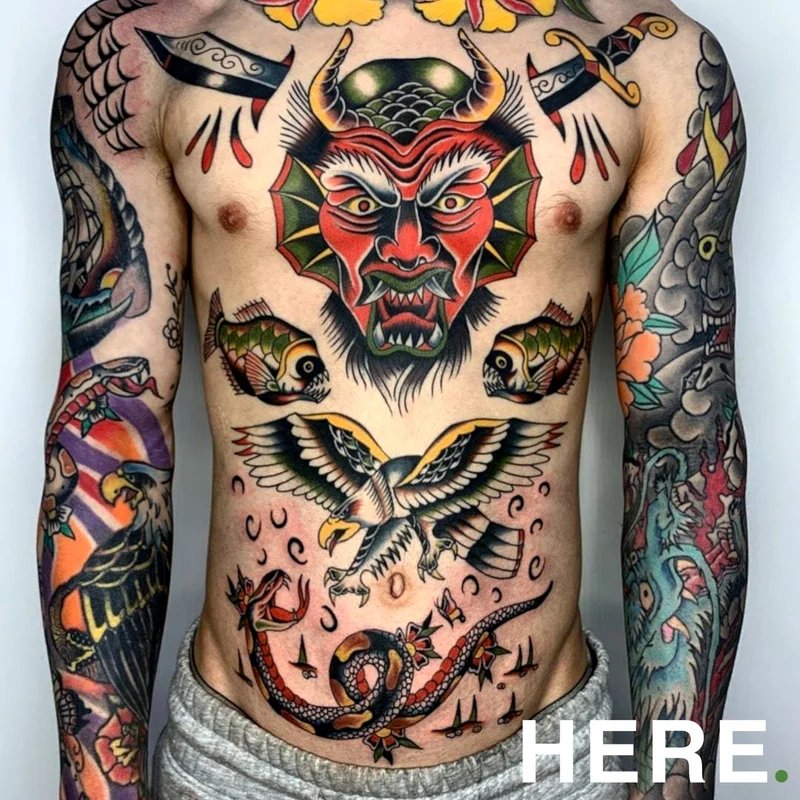
Traditional tattoo styles rely on bold colors for authenticity. American traditional, Japanese, and neo-traditional designs use specific color palettes as defining characteristics. Choosing black-only versions of these styles sacrifices the aesthetic that makes them distinctive.
Cover-ups often require color for effective concealment. Dark old tattoos need vibrant colors to mask underlying ink, making color work necessary rather than optional. The $400-$800 typical cover-up cost reflects this technical requirement, not just color preference.
Getting Accurate Price Quotes
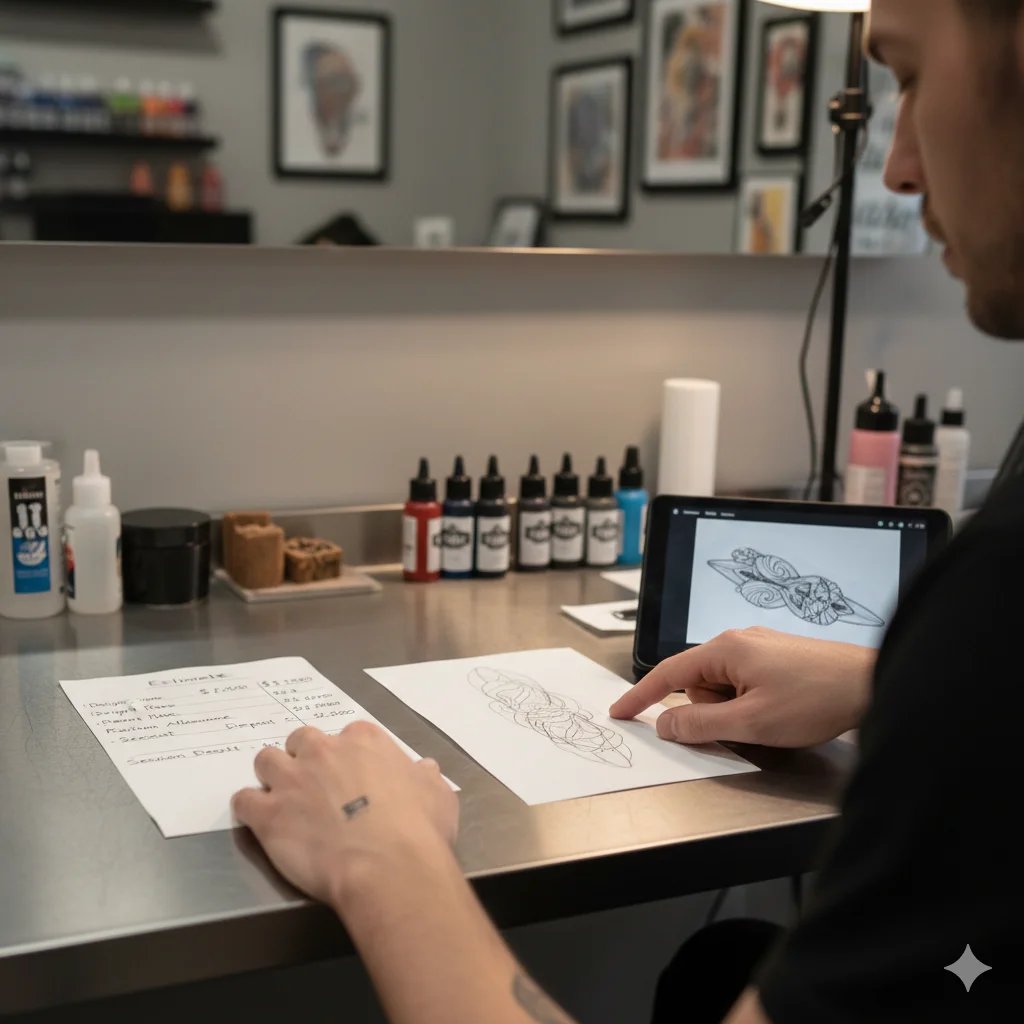
Consultation processes vary by shop, but most offer free estimates. Bring reference images, size preferences, and placement ideas to get accurate quotes. Artists assess complexity, time requirements, and color needs to provide realistic pricing.
Hourly vs. flat-rate pricing affects budgeting differently. Hourly rates ($100-$300/hour) suit large, complex projects where time is uncertain. Flat rates ($150-$500) work better for small, defined designs. Ask which pricing model your artist uses and why.
Deposit requirements typically run $50-$200 or 20-30% of estimated total cost. This deposit applies to your final bill and reserves your appointment. Deposits are usually non-refundable, so commit only when you're certain about the design and artist.
Hidden costs can surprise first-timers. Aftercare products add $15-$30, tips run 15-20% of the total cost, and parking or travel to premium locations adds up. Budget an extra 20-25% beyond the quoted price for these expenses.
Maximizing Value Regardless of Color Choice
Artist selection matters more than color choice for value. Research portfolios thoroughly, read reviews, and prioritize artists whose style matches your vision. A perfect black tattoo from the right artist beats a mediocre color piece from a cheaper alternative.
Timing your appointment strategically can reduce costs. Many shops offer 10-20% discounts during slow seasons (January-March) or weekday appointments. These savings often exceed the color premium, making timing more impactful than ink choice.
Design preparation reduces billable time. Arrive with clear reference images, size decisions, and placement certainty. Artists spend less time on consultation and design revision, potentially saving 1-2 hours of billable time worth $150-$400.
Building relationships with artists yields long-term value. Regular clients often receive 10-15% discounts on subsequent work, free minor touch-ups, and priority scheduling. These benefits accumulate over multiple tattoos, regardless of color choices.
Conclusion
Black tattoos cost less than color work primarily due to time efficiency and simpler technical execution. The typical 10-30% savings stems from faster application, fewer materials, and reduced touch-up needs. However, design complexity, artist expertise, and shop location influence final pricing more than color choice alone.
Here Tattoo specializes in creating custom designs that maximize value regardless of color palette. Our Brooklyn-based artists help clients balance aesthetic goals with budget realities, ensuring every tattoo delivers lasting satisfaction. We provide transparent pricing, detailed consultations, and expert guidance on when color investment makes sense for your specific design.
Ready to explore your tattoo options with expert guidance? Contact Here Tattoo in Brooklyn to schedule a free consultation. We'll assess your design ideas, provide accurate pricing for both black and color options, and help you make the choice that best serves your vision and budget.
Frequently Asked Questions
Do all tattoo artists charge less for black ink?
Most artists charge 10-30% less for black-only tattoos due to reduced time and material costs, though some specialists in black and grey work charge premium rates comparable to color tattoos based on their expertise and demand.
How much does a small black tattoo typically cost?
Small black tattoos (2x2 inches or smaller) typically cost $80-$200 depending on location and artist experience, with most shops enforcing minimum charges of $80-$150 regardless of actual size or complexity.
Will adding one color significantly increase the price?
Adding a single accent color typically increases costs by 15-25% because it requires additional setup time, ink costs, and technical execution, though the impact is less than full-color designs which add 30-50% to base pricing.
Are black tattoos faster to complete than color tattoos?
Black tattoos complete 20-40% faster than equivalent color designs because artists don't need to switch inks, blend multiple pigments, or layer colors for proper saturation, directly reducing billable hours and final costs.
Do black tattoos fade less than color tattoos?
Black ink retains 80-90% of its intensity after 10 years, while color pigments fade to 50-70% depending on type and sun exposure, making black tattoos more cost-effective long-term due to fewer touch-up requirements.
Can I get a discount by choosing black over color?
Many artists offer 10-20% savings for black-only versions of designs originally planned in color, though the discount varies by shop policy and whether the design loses essential character without color elements.
What's the price difference for a sleeve in black vs. color?
A full sleeve in black typically costs $1,500-$3,000, while color versions run $2,000-$4,500, representing a $500-$1,500 difference based on the additional 10-20 hours required for color application and blending.