Realism and hyperrealism tattoos rank as the hardest styles to execute due to extreme precision demands and zero margin for error. These styles require mastery of light, shadow, depth, and proportion. A single misplaced line can ruin the entire piece. At Here Tattoo in Brooklyn, NY, we see clients drawn to challenging styles without understanding the skill required.
Choosing a difficult tattoo style affects your results, budget, and artist selection. The wrong match between style and artist leads to disappointing outcomes. Understanding difficulty levels helps you make informed decisions about your next piece.
In this blog, we will explain what makes certain tattoo styles harder than others. You will learn which styles demand specialist artists, how skin affects difficulty, and what to expect when booking complex work.
What Makes a Tattoo Style Difficult to Execute
Technical complexity separates easy tattoo styles from extremely challenging ones. Some styles forgive small mistakes. Others expose every flaw permanently on skin. Understanding these factors helps you appreciate why certain tattoos cost more and require specialist artists.
Technical Precision vs. Artistic Interpretation
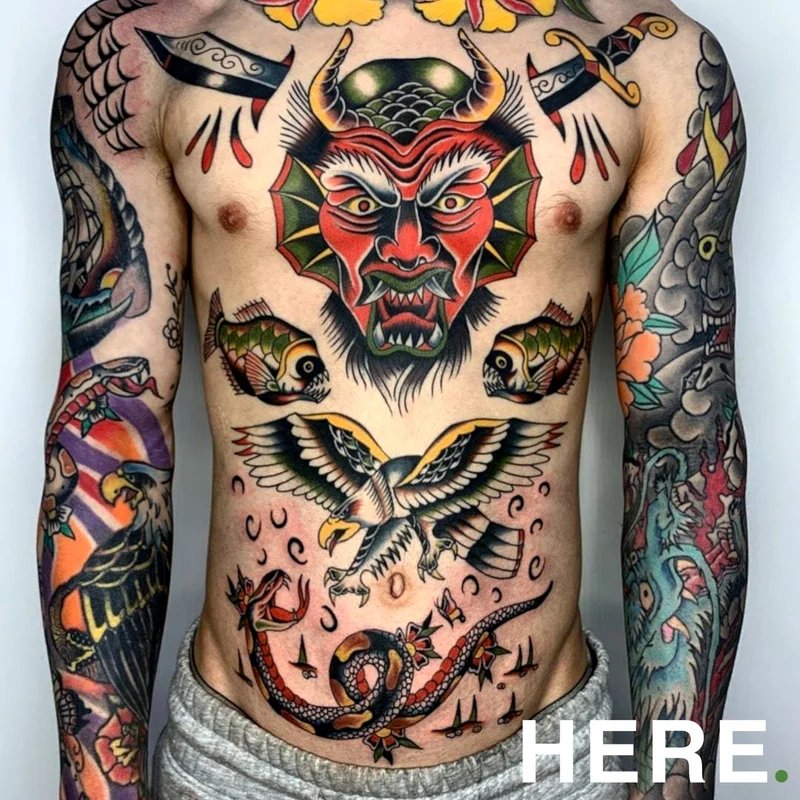
Traditional styles like American Traditional allow artistic interpretation. Bold lines and limited color palettes hide minor inconsistencies. Realism offers no such forgiveness. Every gradient must blend perfectly. Each highlight needs exact placement. The reference image becomes a strict blueprint rather than loose inspiration.
Artists working in precise styles need steady hands and years of practice. They cannot rely on stylistic choices to mask errors. The skin becomes a canvas demanding photographic accuracy.
Margin for Error During Application
Tattooing happens in real-time on living tissue. Skin moves, bleeds, and swells during sessions. Styles with thin lines or subtle gradients leave no room for correction. One slip creates permanent damage to the design.
Bold traditional work tolerates small deviations. Fine line and realism work does not. Artists must maintain perfect control while managing client comfort and skin response. This pressure separates competent artists from true specialists.
Long-Term Aging and Detail Retention
Tattoos change over decades. Sun exposure, skin elasticity, and natural aging affect every piece. Detailed styles suffer most from these changes. Tiny details blur together. Fine lines spread and fade. What looked stunning at year one may become unreadable by year ten.
Artists must design with aging in mind. They balance current aesthetics against long-term durability. This forward-thinking approach requires deep understanding of how ink behaves in skin over time.
Realism and Hyperrealism Tattoo Styles
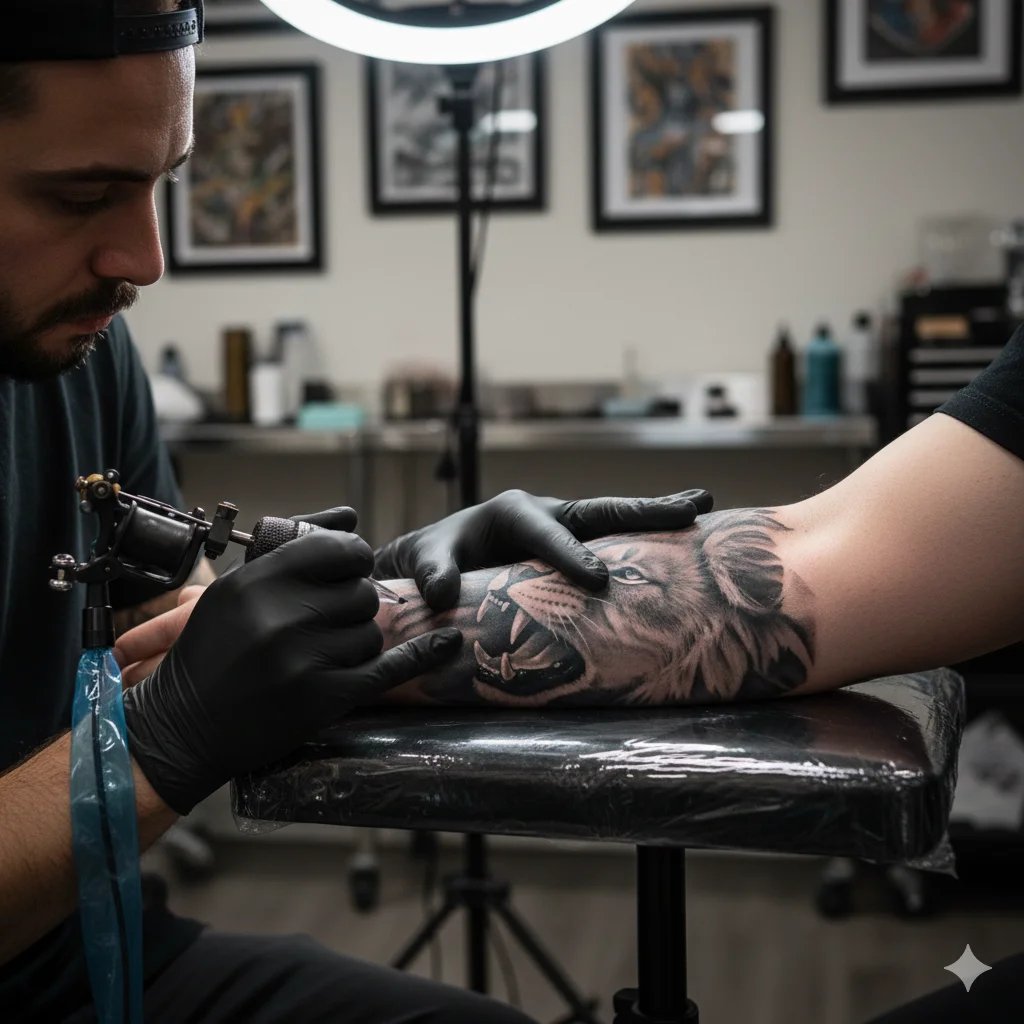
Realism tattoos replicate photographs on skin with stunning accuracy. This style demands the highest technical skill in the industry. Artists must understand both traditional art fundamentals and tattoo-specific techniques. Few artists master this style completely.
Extreme Detail and Precision Requirements
Realistic portraits require thousands of tiny details working together. Each pore, hair strand, and skin texture contributes to the final image. Missing details break the illusion immediately. The human eye recognizes faces instantly and spots errors just as fast.
Artists spend years developing the control needed for this work. They practice gradients, transitions, and micro-details constantly. Even experienced realism artists continue refining their technique throughout their careers.
Mastery of Light, Depth, and Proportions
Realism creates three-dimensional illusions on flat skin. Artists must understand how light interacts with surfaces. They recreate shadows, highlights, and mid-tones using only ink and needle. Incorrect values flatten the image and destroy the realistic effect.
Proportions present another challenge. Human faces follow specific ratios. Eyes sit at predictable distances. Noses align with other features mathematically. Small proportion errors make portraits look "off" even when viewers cannot identify why.
High Risk of Visible Mistakes
Every mark in realism work remains visible in the final piece. There are no bold outlines to hide behind. No stylistic choices excuse poor execution. Clients and viewers judge realism tattoos against the original reference directly.
This visibility creates intense pressure during sessions. Artists cannot pause and restart like digital artists. Each needle stroke becomes permanent immediately. The stress of this work limits how many artists pursue realism seriously.
Fine Line and Micro-Realism Tattoos
Fine line tattoos use extremely thin needles to create delicate, detailed designs. This style has exploded in popularity recently. However, few artists execute it well long-term. The technical demands and aging concerns make fine line work genuinely difficult.
Line Control at Extremely Small Scale
Fine line work uses single needles or tight needle groupings. These create lines thinner than human hair. Controlling these needles requires exceptional steadiness. Any hand tremor shows immediately in the finished line.
Artists must maintain consistent depth throughout each stroke. Too shallow and the ink falls out during healing. Too deep and lines blow out into blurry smudges. This narrow margin demands perfect technique every time.
Blowout, Fading, and Blurring Risks
Fine lines face unique aging challenges. Ink naturally spreads slightly under skin over time. Bold lines absorb this spread without visible change. Fine lines blur noticeably within years.
Blowouts occur when ink deposits too deeply. The ink spreads into surrounding tissue, creating fuzzy edges. Fine line work shows blowouts dramatically. What started as crisp linework becomes muddy and undefined.
Limited Room for Corrections
Traditional tattoos allow touch-ups and corrections. Artists can thicken lines or add shading to fix problems. Fine line work offers fewer options. Adding ink changes the delicate aesthetic entirely.
Cover-ups prove nearly impossible with fine line pieces. The subtle work cannot hide under new designs easily. Clients must accept that fine line tattoos may need laser removal rather than correction if problems arise.
Traditional Japanese (Irezumi) Tattooing
Japanese tattooing follows centuries-old traditions with strict compositional rules. This style covers large body areas with interconnected imagery. Artists must understand Japanese symbolism, mythology, and aesthetic principles deeply. The learning curve spans decades rather than years.
Large-Scale Composition and Body Flow
Irezumi designs wrap around bodies organically. Sleeves connect to chest panels. Back pieces flow into leg work. Artists must visualize how designs move with the body during motion.
This requires understanding anatomy beyond skin-deep knowledge. Muscles flex and stretch skin differently across body areas. Designs must account for these changes while maintaining visual harmony. Few artists develop this spatial awareness fully.
Strict Symbolism and Structural Rules
Japanese tattooing follows specific symbolic conventions. Dragons face certain directions. Flowers bloom in proper seasons. Background elements support main subjects according to tradition. Breaking these rules marks artists as inexperienced or disrespectful.
Learning these conventions takes years of study. Artists must understand Japanese culture, mythology, and artistic history. This knowledge cannot be rushed or abbreviated. Authentic Irezumi requires genuine cultural education.
Long-Term Planning Across Multiple Sessions
Large Japanese pieces require dozens of sessions over years. Artists must plan entire body suits from the first appointment. Early decisions affect options years later. Poor planning creates awkward transitions and wasted space.
This long-term thinking challenges both artists and clients. Relationships must remain stable across years of work. Artists must remember design intentions session after session. Documentation and planning become essential skills alongside tattooing ability.
Trash Polka and Mixed-Style Tattoos
Trash Polka combines realistic imagery with abstract elements and typography. This German-originated style appears chaotic but requires careful balance. Artists must master multiple techniques simultaneously. The apparent randomness actually demands precise intentional design.
Balancing Chaos With Intentional Design
Trash Polka looks spontaneous and wild. Splashes, smears, and geometric shapes interrupt realistic elements. However, every "random" element serves the composition. True chaos would create visual disaster rather than striking art.
Artists must understand design principles deeply to break them effectively. They need to know why rules exist before violating them purposefully. This meta-level understanding separates skilled Trash Polka artists from imitators.
Combining Realism, Typography, and Abstract Elements
This style demands competence across multiple disciplines. Artists must execute realistic portraits alongside bold graphic elements. They incorporate text, geometric shapes, and painterly effects. Weakness in any area shows immediately.
Few artists excel at all these techniques equally. Most specialize in one area and struggle with others. True Trash Polka masters represent rare combinations of diverse skills.
High Risk of Visual Imbalance
Mixed-style work fails when elements compete rather than complement. Too much realism overwhelms abstract elements. Too much chaos obscures the realistic anchors. Finding balance requires exceptional compositional instincts.
Failed Trash Polka looks like random elements thrown together. Successful pieces create unified visual statements from diverse components. This distinction separates amateur attempts from professional execution.
How Skin Type and Placement Increase Tattoo Difficulty
Skin characteristics affect tattoo difficulty as much as style choice. The same design becomes harder or easier depending on placement and skin type. Artists must adapt techniques for each unique canvas. Understanding these factors helps clients set realistic expectations.
Skin Texture, Stretching, and Elasticity
Skin varies dramatically across bodies and individuals. Some skin accepts ink readily. Other skin resists pigment or heals unpredictably. Artists cannot control these biological factors.
Stretchy skin presents particular challenges. Lines distort as skin moves. Details blur as skin relaxes. Artists must account for these changes during application. Experience with diverse skin types proves essential.
High-Movement and High-Fade Areas
Certain body areas challenge even experienced artists. Hands, feet, and fingers see constant movement and friction. Ink fades faster in these locations. Fine details disappear within months rather than years.
Inner lips, palms, and finger sides present extreme difficulty. These areas reject ink aggressively. Most artists refuse work in these locations entirely. Clients requesting these placements must accept likely fading and touch-up needs.
Scarred or Uneven Skin Challenges
Scar tissue behaves differently than normal skin. It may reject ink, absorb it unevenly, or heal unpredictably. Artists must assess scar tissue carefully before committing to designs.
Stretch marks, burns, and surgical scars each present unique challenges. Some can be tattooed successfully with modified techniques. Others cannot hold ink reliably. Honest assessment protects both artists and clients from disappointing results.
Which Tattoo Styles Are Considered the Hardest Overall
Industry consensus places realism at the top of difficulty rankings. However, several styles compete for this position depending on specific criteria. Understanding different difficulty factors helps clients appreciate what they are asking artists to accomplish.
Styles With the Smallest Margin for Error
Realism and fine line work allow virtually no mistakes. Every mark contributes to or detracts from the final piece. Artists cannot hide errors behind stylistic choices. This unforgiving nature makes these styles technically hardest.
Geometric work also demands precision. Straight lines must be perfectly straight. Circles must be truly round. Mathematical accuracy becomes the standard rather than artistic interpretation.
Styles Most Affected by Aging
Fine line and watercolor tattoos age most dramatically. Their delicate elements blur and fade faster than bold work. What looks stunning initially may become unrecognizable within a decade.
Artists must balance current aesthetics against long-term durability. Some clients accept faster aging for initial beauty. Others prioritize longevity over delicate details. This conversation should happen before any work begins.
Why Realism Is Most Often Ranked the Hardest
Realism combines multiple difficulty factors simultaneously. It demands extreme precision with zero error margin. It requires mastery of traditional art fundamentals. It ages poorly without proper execution. It exposes every flaw to immediate viewer judgment.
No other style combines these challenges so completely. Artists may find specific aspects of other styles harder. However, realism's total difficulty package exceeds all competitors consistently.
Key Takeaways
- Realism and hyperrealism rank as the hardest tattoo styles overall
- Fine line work demands extreme precision with significant aging concerns
- Japanese Irezumi requires years of cultural and technical education
- Skin type and placement affect difficulty as much as style choice
- Specialist artists charge more because difficult styles carry higher risk
- Portfolio evidence matters more than artist claims or reputation
- Difficult styles require clear communication and realistic expectations
Finding Artists Qualified for Difficult Tattoo Styles in Brooklyn, NY
Brooklyn hosts numerous talented artists, but few specialize in the hardest styles. Finding qualified specialists requires research beyond Instagram followers. Portfolio evidence and peer recognition matter most when selecting artists for challenging work.
Identifying Specialists by Portfolio Evidence
Portfolios reveal true capabilities better than any marketing. Look for healed photos rather than fresh work only. Fresh tattoos always look better than healed results. Artists confident in their work show both stages.
Consistency across multiple pieces demonstrates reliable skill. One impressive tattoo might represent luck. Dozens of excellent pieces prove genuine mastery. Examine portfolios critically before booking consultations.
Why Generalists Often Avoid High-Risk Styles
Many talented artists refuse realism or fine line requests. They recognize their limitations honestly. This self-awareness protects clients from disappointing results. Respect artists who decline work outside their expertise.
Generalists excel at versatile, forgiving styles. They serve most clients well with traditional, neo-traditional, or illustrative work. Pushing them toward specialist styles benefits nobody.
Booking and Waitlist Expectations
Top specialists maintain long waitlists. Demand exceeds their available time consistently. Expect months-long waits for the best realism artists. This delay reflects their quality and reputation.
At Here Tattoo, we help clients understand realistic timelines. We connect people with appropriate artists for their desired styles. Patience leads to better results than rushing into available appointments.
Cost and Commitment of Hard Tattoo Styles in Brooklyn, NY
Difficult tattoo styles cost significantly more than simpler work. Higher prices reflect increased risk, longer sessions, and specialized expertise. Understanding these factors helps clients budget appropriately for quality results.
Longer Sessions and Multiple Appointments
Realism pieces require extended session times. Artists cannot rush detailed work without sacrificing quality. Large realistic pieces may need multiple full-day sessions. Clients must commit time alongside money.
Fine line work proceeds slowly due to precision requirements. Artists take frequent breaks to maintain steadiness. What seems like a small design may require hours of careful execution.
Higher Pricing Due to Technical Risk
Specialist artists charge premium rates for difficult styles. Their years of focused training justify higher prices. The risk they assume with each piece demands appropriate compensation.
Bargain hunting for difficult styles leads to regret. Cheap realism rarely looks realistic. Discount fine line work blows out and fades quickly. Investment in quality protects your skin and satisfaction long-term.
Why Difficult Styles Require Clear Expectations
Communication prevents disappointment with challenging tattoos. Clients must understand aging concerns, touch-up needs, and realistic outcomes. Artists must explain limitations honestly before starting work.
Here Tattoo prioritizes these conversations. We ensure clients understand what they are requesting. We discuss alternatives when expectations seem unrealistic. This honesty builds trust and leads to better results.
Conclusion
Choosing a difficult tattoo style requires understanding the challenges involved. Realism, fine line, and Japanese work demand specialist artists with years of focused experience. Your skin deserves someone qualified for the specific style you want.
Here Tattoo guides clients through these decisions thoughtfully. We help match your vision with artists capable of executing it properly. Our Brooklyn studio connects you with specialists who deliver lasting results.
We invite you to discuss your tattoo ideas with our team. We will help you understand what your desired style requires. Contact Here Tattoo to start planning your next meaningful piece.
FAQs
Why is realism considered the hardest tattoo style?
Realism demands photographic accuracy on living skin. Every gradient, shadow, and highlight must be perfect. There are no bold lines or stylistic choices to hide mistakes. This combination of precision requirements and zero error margin makes realism uniquely challenging.
How long do fine line tattoos last compared to traditional styles?
Fine line tattoos typically show noticeable fading and blurring within five to ten years. Traditional bold work often remains crisp for decades. The thin lines spread naturally under skin over time. Proper aftercare and sun protection help extend fine line longevity.
Can any tattoo artist do realism work?
Most tattoo artists cannot execute quality realism. This style requires specialized training beyond standard tattooing skills. Artists need traditional art education in light, shadow, and proportion. Always verify realism experience through healed portfolio examples before booking.
What makes Japanese tattooing difficult to learn?
Japanese tattooing requires understanding centuries of cultural tradition. Artists must learn specific symbolism, compositional rules, and mythological references. Large-scale body planning adds complexity. Most artists study for a decade or more before attempting authentic Irezumi.
Do difficult tattoo styles cost more in Brooklyn?
Yes, specialist artists charge premium rates for challenging styles. Prices reflect years of focused training and higher execution risk. Expect to pay significantly more for quality realism or fine line work. Budget appropriately for the expertise your desired style requires.
How do I know if an artist can handle a difficult style?
Examine their portfolio for healed examples in your desired style. Look for consistency across multiple pieces. Check for peer recognition and industry awards. Ask about their specific training and experience with that style during consultation.
Should I choose a simpler style for my first tattoo?
Simpler styles often make sense for first tattoos. They cost less, heal more predictably, and age better. However, your personal connection to the design matters most. Discuss your options with a qualified artist who can explain trade-offs honestly.