A $50 tattoo typically measures between 1 to 2 inches in diameter, roughly the size of a quarter to a half-dollar coin. At this price point, you're looking at simple designs with minimal detail—think small symbols, single words, or basic line work that can be completed in 30-45 minutes. The exact size depends on design complexity, placement area, and your artist's pricing structure.
This budget-friendly entry point makes tattooing accessible for first-timers testing the waters or collectors adding small pieces to existing work. Understanding what $50 actually gets you helps set realistic expectations and ensures you walk into the studio confident about your investment.
In this guide, we'll break down exact sizing expectations, design limitations at this price point, how placement affects cost, and what questions to ask your Brooklyn tattoo artist before booking. You'll learn how to maximize value while ensuring quality work that ages well on your skin.
Understanding Tattoo Pricing Basics

Tattoo pricing operates on multiple factors that extend beyond simple size measurements. Most professional studios, including those in Brooklyn, structure their pricing around time, complexity, and artist experience rather than strict size-to-price ratios.
Shop minimums form the foundation of tattoo pricing. Industry data shows that shop minimums across the U.S. range from $50 to $150, with urban markets like Brooklyn typically starting at $80-100. This minimum covers studio overhead, equipment sterilization, setup time, and the artist's base compensation regardless of how small the tattoo might be.
The $50 price point sits at the lower end of this spectrum, which immediately tells you something about size and complexity limitations. At this rate, artists allocate approximately 30-45 minutes of chair time, including consultation, stencil placement, and actual tattooing.
Hourly rates provide another pricing framework. Established tattoo artists in Brooklyn charge between $150-250 per hour, while apprentices or newer artists might charge $80-120 hourly. A $50 tattoo from an experienced artist represents roughly 20 minutes of actual tattooing time, which translates to very small, simple designs.
Design complexity dramatically impacts pricing independent of size. A 1-inch geometric mandala with intricate line work requires significantly more time and precision than a 1-inch solid heart outline. Color work, shading gradients, and fine details all extend chair time and increase costs accordingly.
Placement also affects pricing structure. Areas requiring more technical skill—like fingers, behind ears, or along the ribcage—often carry premium pricing due to difficulty and pain management considerations. Conversely, flat, easily accessible areas like the forearm or shoulder allow faster, more efficient work.
Artist experience and reputation create substantial pricing variations. A $50 tattoo from a renowned artist might be smaller or simpler than the same budget with a newer professional. You're not just paying for ink and time but for years of technical refinement and artistic vision.
Typical Size Range for $50 Tattoos
A $50 budget constrains your tattoo to approximately 1 to 2 inches in any direction, though the exact dimensions vary based on design shape and orientation. Think of common reference points: a quarter coin measures 0.955 inches in diameter, while a half-dollar spans 1.205 inches. Your $50 tattoo falls within or slightly exceeds this range.
Linear designs like words or phrases might stretch to 2-3 inches in length while remaining narrow in height—perhaps 0.5 inches tall. A single word in simple script could fit this budget if it contains 4-6 letters without elaborate flourishes or shading.
Circular or square designs typically max out around 1.5 inches in diameter at the $50 price point. This accommodates simple symbols like stars, hearts, small flowers, zodiac signs, or basic geometric shapes. The compact format requires clean, bold lines without intricate internal details.
Vertical designs such as small arrows, minimalist trees, or simple crosses can reach 2 inches in height while maintaining narrow width profiles. The elongated shape allows slightly larger visual impact without increasing the overall surface area that requires tattooing time.
Design density matters as much as outer dimensions. A 1.5-inch outline of a crescent moon takes less time than a 1.5-inch mandala filled with detailed patterns. At $50, you're limited to designs that can be executed cleanly within 30-45 minutes, which favors simplicity over complexity.
Negative space becomes your friend at this price point. Designs that incorporate skin tone as part of the visual composition require less ink saturation and faster execution. A small outline tattoo uses negative space effectively while staying within budget constraints.
Body placement influences perceived size. A 1.5-inch tattoo on your finger appears larger relative to the body part than the same size on your shoulder blade. Consider how the tattoo will look proportional to its placement area when planning your design.
Multiple small tattoos don't necessarily fit a $50 budget. Two separate 1-inch designs require individual stencil placement, positioning adjustments, and mental reset between pieces. Most artists charge per piece or apply their shop minimum to each separate design, even if the combined size seems small.
Design Complexity Limitations at This Price Point
The $50 price point demands design simplicity that can be executed efficiently without sacrificing quality. Understanding these limitations helps you choose designs that look intentional rather than rushed or incomplete.
Line work tattoos dominate the $50 category. Simple outlines, basic geometric shapes, and minimalist illustrations work well within time constraints. A single-line heart, basic triangle, small arrow, or outline star can be executed cleanly with bold, confident strokes that age well over time.
Solid black designs without shading or color gradients fit this budget effectively. Small solid shapes like filled circles, diamonds, or simple silhouettes require straightforward ink saturation without the time-intensive blending that shading demands. The bold approach also ensures longevity as the tattoo ages.
Text limitations become apparent at this price point. You can typically fit 1-2 short words in simple fonts like basic script or block letters. Elaborate calligraphy, decorative flourishes, or multiple words in small text push beyond the $50 threshold. Font choice matters—clean, readable styles work better than intricate lettering that requires precision detail work.
Color restrictions apply almost universally. Color tattooing requires multiple passes with different ink colors, careful blending, and often touch-ups to achieve even saturation. A $50 budget rarely accommodates color work beyond perhaps a single accent color in a very small area. Black ink remains the standard at this price point.
Shading and gradients exceed budget constraints. Smooth shading transitions, dotwork gradients, or watercolor effects require significant chair time and technical skill. These techniques involve building up ink density gradually, which conflicts with the quick execution necessary for $50 pricing.
Fine details like intricate patterns, realistic portraits, or complex imagery aren't feasible. A 1.5-inch rose might work as a simple outline, but adding petal details, thorns, leaves, and shading would require substantially more time and budget. Simplification becomes necessary—focus on the essential elements that communicate your concept.
Symbolic designs work exceptionally well within these constraints. Astrological symbols, simple anchors, basic crosses, peace signs, or minimalist representations of meaningful concepts translate effectively to small, simple tattoos. These designs carry personal significance without requiring elaborate execution.
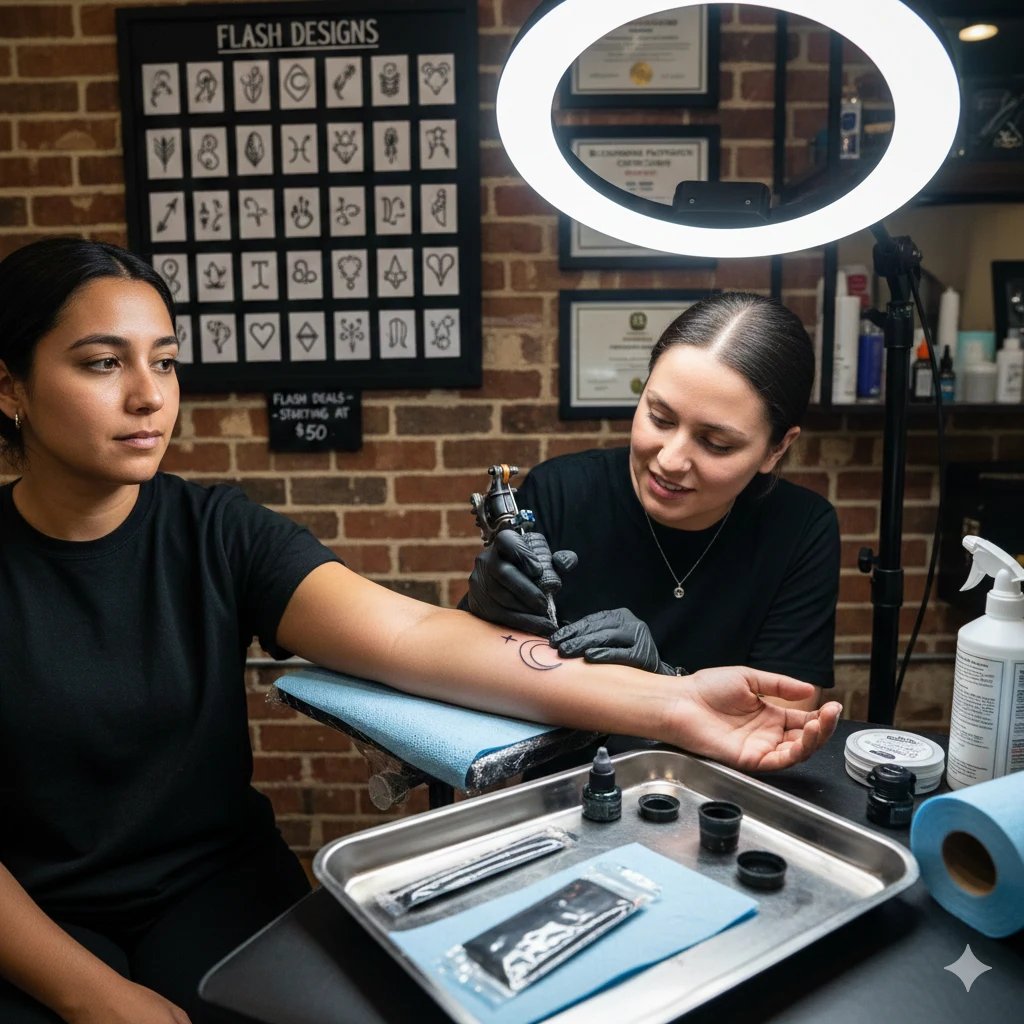
Flash designs offered by tattoo shops often fit the $50 category perfectly. These pre-drawn designs are optimized for quick, clean execution and typically fall within shop minimum pricing. Many studios maintain flash books specifically for clients working with smaller budgets.
Best Placement Options for Small Budget Tattoos
Placement selection significantly impacts both the tattooing process and how your $50 design presents visually. Certain body areas accommodate small tattoos better while offering easier execution for artists.
Wrist placement ranks among the most popular locations for small tattoos. The flat, accessible surface allows quick work, and the area naturally suits designs in the 1-2 inch range. Inner wrist tattoos display easily when desired but can be covered with watches or bracelets. The thin skin and proximity to bone create moderate pain levels that most first-timers tolerate well.
Behind the ear offers discreet placement for tiny designs under 1 inch. This location works perfectly for small symbols, single letters, or minimalist icons. The curved surface requires some technical adjustment, but the small canvas naturally limits design size to budget-appropriate dimensions. Hair coverage provides easy concealment when needed.
Finger tattoos fit the $50 budget but come with important considerations. The small surface area naturally constrains size, and simple designs like bands, dots, or tiny symbols work best. However, finger tattoos fade faster than other locations due to constant friction and skin regeneration. Many artists charge premiums for finger work despite the small size due to technical difficulty.
Ankle placement provides a flat, accessible area suitable for small designs. The outer or inner ankle accommodates 1.5-2 inch tattoos comfortably, and the location offers easy concealment with socks or pants when necessary. Pain levels remain moderate, and the area heals relatively quickly with proper care.
Upper arm near the shoulder offers excellent placement for small tattoos. The area provides flat, easily accessible skin that allows efficient work. Small designs here can stand alone or potentially integrate into larger pieces later. The location experiences minimal friction from clothing and typically heals without complications.
Forearm placement works well for slightly larger designs within the $50 range. The flat, visible surface suits linear designs, small symbols, or short text. Inner forearm offers a more private option, while outer forearm provides constant visibility. The area tolerates tattooing well with manageable pain levels.
Ribcage and side body locations generally don't suit $50 tattoos despite accommodating small sizes. These areas rank among the most painful tattoo locations and often require more time due to client discomfort and necessary breaks. Most artists charge premiums for ribcage work regardless of size.
Shoulder blade provides excellent placement for small, simple designs. The flat surface and low pain level make for efficient tattooing sessions. The location offers easy concealment with most clothing while remaining visible in tank tops or swimwear.
Avoid placing $50 tattoos in locations that naturally demand larger designs. A tiny tattoo centered on a large, flat area like the upper back or thigh can appear lost or unfinished. Choose placements where small designs look intentional and proportional to the body part.
What to Expect During Your $50 Tattoo Session
Understanding the session flow helps first-timers feel prepared and ensures realistic expectations about the experience. A $50 tattoo session typically spans 45-60 minutes from arrival to completion, including consultation and aftercare instructions.
Arrival and consultation begin your session. You'll discuss your design concept with the artist, who will assess whether your idea fits the budget and time constraints. Be prepared for honest feedback—experienced artists know what's achievable at this price point and will suggest modifications if necessary. This conversation typically takes 5-10 minutes.
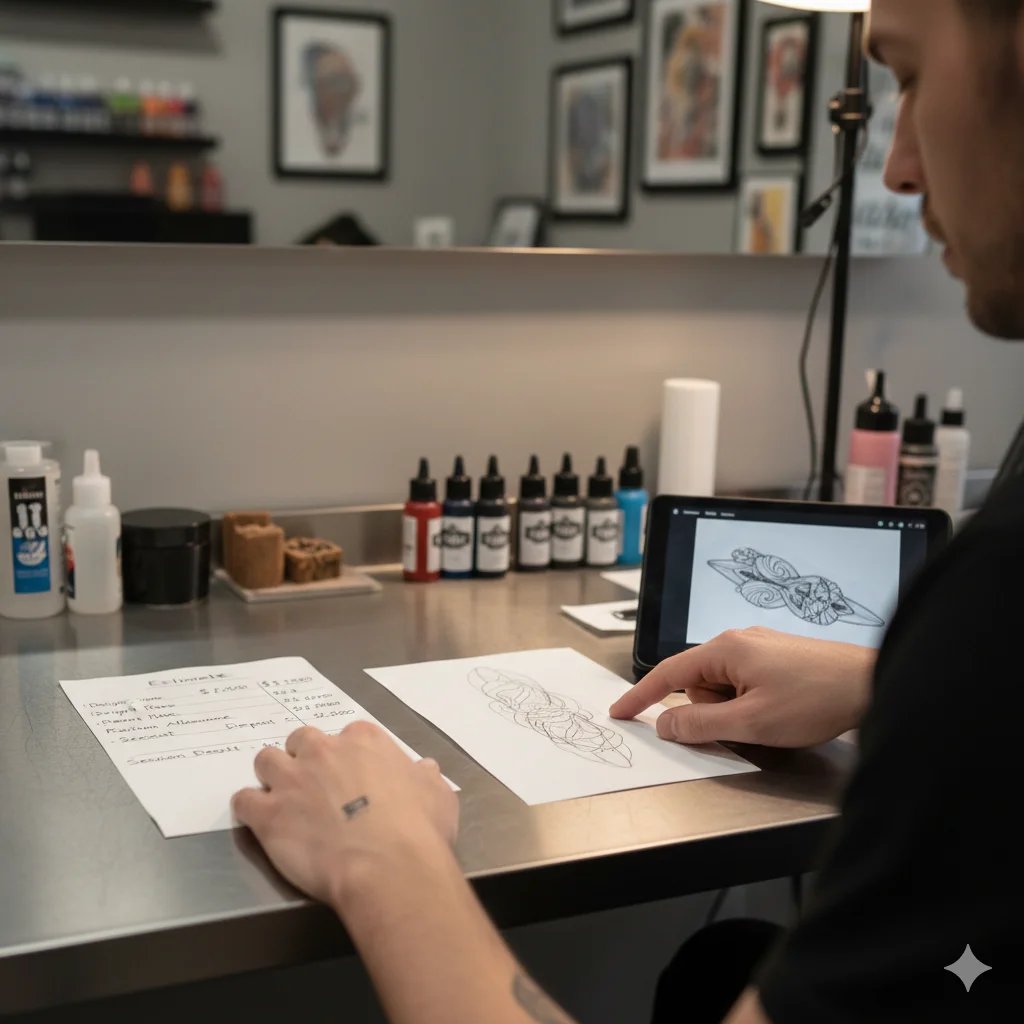
Design finalization happens quickly for simple tattoos. If you're choosing from flash designs, selection is immediate. Custom designs at this price point involve minimal sketching—the artist might draw directly on transfer paper or make quick adjustments to existing templates. Don't expect elaborate custom illustrations; the budget supports simple, straightforward designs.
Stencil placement follows design approval. The artist creates a transfer stencil and positions it on your chosen body area. You'll check placement in a mirror and approve the position before any needles touch skin. This step takes 5-10 minutes and represents your last chance to adjust positioning.
Preparation and setup involve the artist preparing equipment, opening sterile needle packages, pouring ink, and ensuring everything meets safety standards. You'll see them put on fresh gloves and set up their workspace. This professional preparation takes a few minutes but demonstrates proper hygiene protocols.
The tattooing process for a $50 design typically requires 20-30 minutes of actual needle time. The artist works efficiently, executing clean lines or solid fills without excessive detail work. For first-timers, the sensation varies by placement—some describe it as scratching or burning, while others compare it to repetitive pinching. Small tattoos allow most people to sit comfortably without breaks.
Pain management for small tattoos rarely requires special intervention. The short duration makes discomfort manageable for most clients. Breathing techniques help—steady, deep breaths reduce tension and pain perception. Avoid caffeine or alcohol before your session, as both thin blood and can increase bleeding during the tattoo process.
Completion and inspection happen quickly. The artist wipes away excess ink, and you'll see the finished tattoo for the first time. Small tattoos often look darker and slightly raised immediately after completion—this is normal. The artist checks their work for any spots needing touch-ups, though simple designs rarely require additional passes.
Aftercare instructions conclude your session. The artist applies protective covering (typically plastic wrap or specialized tattoo bandage) and explains care protocols. Standard aftercare involves keeping the area clean, applying thin layers of unscented lotion, and avoiding sun exposure or submersion in water. This instruction takes 5-10 minutes, and many studios provide printed aftercare sheets.
Payment and tipping happen at checkout. The $50 covers the tattoo itself, but tipping remains customary in tattoo culture. Standard tips range from 15-20% of the service cost, so budget an additional $10-15 if possible. Tips acknowledge the artist's skill and professionalism, especially important when receiving quality work at lower price points.
How Brooklyn Pricing Compares to National Averages
Geographic location substantially impacts tattoo pricing, with urban markets like Brooklyn commanding premium rates compared to national averages. Understanding these regional variations helps set realistic expectations for what $50 delivers in different markets.
Recent industry analysis indicates that tattoo artists in New York earn median annual incomes of $52,000, approximately 15-20% above the national median of $43,000. This wage differential translates directly to higher shop minimums and hourly rates in Brooklyn studios.
Brooklyn's competitive tattoo scene features hundreds of studios ranging from street-level shops to high-end boutique parlors. Shop minimums in the borough typically start at $80-100, with many established artists setting $100-150 minimums. A true $50 tattoo in Brooklyn is increasingly rare outside of special promotions or apprentice work.
Manhattan pricing exceeds Brooklyn rates further, with shop minimums often starting at $150-200 in trendy neighborhoods like SoHo or the Lower East Side. The same 1.5-inch simple design that might cost $50 in smaller markets could command $100-150 in Manhattan studios.
National comparison reveals significant regional variation. Tattoo pricing data shows that small tattoos in smaller cities or rural areas often start at $40-60, while major metropolitan areas like Los Angeles, San Francisco, and Chicago mirror New York's premium pricing. A $50 budget stretches further in markets like Austin, Texas, or Portland, Oregon, where lower overhead costs allow more competitive pricing.
Apprentice and newer artists in Brooklyn sometimes offer lower rates to build portfolios and client bases. These professionals might honor $50-80 pricing for small, simple designs while developing their skills. The work quality can be excellent, though you're trading the experience level of established artists for more accessible pricing.
Flash sales and promotions occasionally bring Brooklyn pricing down to the $50 range. Some studios run Friday the 13th specials, holiday promotions, or flash days where pre-designed tattoos are offered at reduced rates. These events provide opportunities to get work from established artists at lower price points.
Overhead costs in Brooklyn justify higher pricing. Studio rent in desirable neighborhoods, licensing fees, insurance, equipment costs, and supply expenses all exceed national averages. Artists must charge accordingly to maintain sustainable businesses while meeting New York's regulatory requirements.
Quality considerations matter when comparing prices across markets. Brooklyn's competitive environment pushes artists to maintain high standards—you're paying premium prices but typically receiving work from professionals operating in a market that demands excellence. Lower-priced markets may offer bargains but with more variable quality standards.
At Here Tattoo in Brooklyn, we balance competitive pricing with the quality craftsmanship our clients expect. While pure $50 tattoos are limited to our simplest flash designs, we work with clients to find designs that fit their budgets while maintaining the artistic standards that define Brooklyn's tattoo culture.
Maximizing Value Within Your Budget
Strategic planning helps you get the best possible tattoo within a $50 budget, ensuring quality work that you'll appreciate for years rather than a rushed piece you'll regret.
Choose flash over custom designs. Flash designs are pre-drawn illustrations optimized for quick, clean execution. Artists have practiced these designs repeatedly, allowing efficient, confident work that maximizes quality within time constraints. Custom designs at this price point often feel rushed or oversimplified compared to well-executed flash.
Prioritize placement carefully. Select body areas that naturally suit small tattoos and allow easy, efficient work. Flat, accessible locations like wrists, forearms, or ankles enable artists to work quickly without awkward positioning or technical challenges that eat into your limited time budget.
Embrace simplicity intentionally. A well-executed simple design outperforms a poorly executed complex one every time. Bold, clean lines in a minimalist design age better and look more intentional than an overly ambitious piece crammed into a small space. Think "less is more" rather than trying to fit maximum detail into minimum space.
Consider black ink exclusively. Color work requires additional time and multiple ink passes that push beyond $50 budgets. Black ink offers excellent contrast, ages predictably, and allows the artist to focus on clean execution rather than color blending. The classic look remains timeless and versatile.
Research artists' portfolios before booking. Look for artists whose style naturally aligns with simple, small designs. Some tattooers specialize in fine-line minimalism or bold traditional work that translates perfectly to budget-friendly sizing. Matching your design to an artist's strengths ensures better results.
Book during off-peak times. Some studios offer discounted rates for appointments during slower periods like weekday afternoons. While not universal, asking about timing-based pricing might stretch your budget slightly further or allow minor design upgrades.
Plan for future expansion. If you're considering a larger piece eventually, position your small tattoo strategically so it can integrate into a bigger design later. A small element that stands alone now but could become part of a sleeve or larger composition offers long-term value beyond the initial $50 investment.
Avoid trendy designs that might feel dated quickly. Classic symbols, meaningful personal icons, or timeless imagery ensure your tattoo remains relevant regardless of changing trends. A well-chosen simple design maintains its appeal far longer than a trendy motif that feels dated within a year.
Communicate clearly with your artist about budget constraints upfront. Honest conversation about your $50 limit allows the artist to suggest designs that work well within that framework rather than proposing ideas that require budget increases. Transparency prevents disappointment and ensures alignment from the start.
Skip the touch-up expectation. Most $50 tattoos are simple enough that touch-ups shouldn't be necessary if executed properly. However, understand that minor imperfections might occur, and requesting free touch-ups on already budget-priced work isn't always reasonable. Focus on choosing an artist whose initial work quality minimizes touch-up needs.
Red Flags and Quality Concerns at Low Price Points
While budget-friendly tattoos can offer excellent value, certain warning signs indicate potential quality or safety issues that should prompt reconsideration.
Suspiciously low pricing below market norms raises concerns. If a studio offers $20-30 tattoos in a market where $80-100 minimums are standard, question why. Extremely low pricing might indicate unlicensed artists, substandard equipment, or corner-cutting on safety protocols. Professional tattooing has inherent costs that can't be reduced below certain thresholds without compromising quality or safety.
Lack of portfolio evidence should concern you. Legitimate artists maintain portfolios showcasing their work, including small, simple designs. If an artist can't show examples of tattoos similar to what you're requesting, they may lack experience with that style or size. Always review portfolio work before committing.
Unclear licensing or certification represents a serious red flag. Professional tattoo artists must hold appropriate licenses and operate in inspected, approved facilities. Ask to see licenses, health department certifications, and proof of bloodborne pathogen training. Legitimate professionals display these credentials openly and answer questions without defensiveness.
Pressure tactics or rushed decisions indicate problematic business practices. Reputable artists want clients to feel confident and informed. High-pressure sales approaches, resistance to questions, or pushing you toward immediate decisions without consultation time suggest prioritizing quick transactions over client satisfaction.
Reused or questionable equipment represents a health hazard. All needles must be single-use and opened from sterile packaging in front of you. Ink should be poured into disposable caps, never double-dipped. Reusable equipment like tattoo machines must be properly sterilized using autoclaves. Any deviation from these standards warrants walking away immediately.
Unwillingness to discuss aftercare suggests lack of professionalism. Proper healing is crucial for tattoo longevity and your health. Artists should provide detailed aftercare instructions and answer questions about the healing process. Dismissive attitudes toward aftercare indicate broader professionalism issues.
No consultation process before tattooing raises concerns. Even for simple $50 designs, artists should discuss your concept, assess placement, and ensure you understand what's achievable within your budget. Skipping consultation and moving straight to tattooing suggests a transactional approach that prioritizes speed over quality.
Dirty or disorganized studio environment indicates potential health risks. Professional tattoo studios maintain clean, organized workspaces with proper sanitation protocols. Cluttered, dirty, or chaotic environments suggest inadequate attention to hygiene standards that protect your health.
Unrealistic promises about design complexity or size at the $50 price point suggest dishonesty. If an artist claims they can execute a detailed, multi-colored, 4-inch custom design for $50, they're either lying about the final cost or planning to rush through work that requires more time. Trust artists who set realistic expectations over those making impossible promises.
At Here Tattoo, we maintain transparent pricing that reflects the true cost of professional, safe tattooing. While we work with various budgets, we never compromise on safety standards, equipment quality, or artistic integrity to hit lower price points. Your health and satisfaction matter more than quick transactions.
Conclusion
A $50 tattoo delivers a small, simple design typically measuring 1-2 inches, executed in clean black line work or solid fills without complex details or color. Understanding these limitations helps you choose designs that look intentional and professional rather than rushed or incomplete. The key to satisfaction at this price point lies in embracing simplicity, selecting appropriate placement, and working with artists whose skills align with straightforward execution.
Brooklyn's tattoo market commands premium pricing compared to national averages, making true $50 tattoos increasingly rare outside of flash designs or apprentice work. However, strategic choices about design, placement, and artist selection maximize value within budget constraints. Quality doesn't always require large investments, but it does demand realistic expectations and careful planning.
At Here Tattoo in Brooklyn, we help clients navigate budget considerations while maintaining the artistic standards and safety protocols that define professional tattooing. Whether you're exploring your first small piece or adding to an existing collection, we'll guide you toward designs that fit your budget and vision. Ready to discuss your tattoo idea? Contact Here Tattoo today to schedule a consultation and explore what's possible within your budget. Our experienced artists will work with you to create meaningful ink that reflects your story, regardless of size.
Frequently Asked Questions
Can I get a colored tattoo for $50?
Color tattoos rarely fit a $50 budget due to the additional time required for multiple ink passes and color blending. At this price point, you're limited to black ink or possibly a single accent color in a very small area. Full color work typically requires budgets starting at $100-150 minimum.
How long does a $50 tattoo take to complete?
A $50 tattoo typically requires 30-45 minutes of actual tattooing time, with the total appointment lasting 45-60 minutes including consultation, stencil placement, and aftercare instructions. Simple designs with clean lines or solid fills can be executed efficiently within this timeframe.
Will a small $50 tattoo fade faster than larger ones?
Tattoo longevity depends more on placement, sun exposure, and aftercare than size. Small tattoos can last just as long as large ones if properly cared for. However, very fine details in small tattoos may blur slightly over time as ink naturally spreads in the skin, which is why bold, simple designs work best at this size.
Can I bring my own design for a $50 tattoo?
You can bring design inspiration, but extensive custom work typically exceeds $50 budgets. Artists may simplify your concept to fit time constraints, or they might suggest choosing from flash designs that are optimized for quick execution. Be prepared for modifications to make your idea feasible at this price point.
Do I need to tip on a $50 tattoo?
Tipping remains customary in tattoo culture regardless of price. Standard tips range from 15-20%, so budget an additional $10-15 if possible. Tips acknowledge the artist's skill and professionalism, especially important when receiving quality work at lower price points.
What's the smallest tattoo size that still looks good?
Tattoos as small as 0.5 inches can look excellent if designed appropriately. Simple symbols, dots, or minimal line work translate well to tiny sizes. However, designs requiring detail or text readability typically need at least 1-1.5 inches to maintain clarity and age well over time.
Can I get multiple small tattoos for $50?
Most artists apply shop minimums to each separate tattoo, even if they're small. Two separate 1-inch designs typically cost more than a single 2-inch piece because each requires individual stencil placement and setup. Discuss your concept with the artist, but expect to pay per piece rather than combined size.